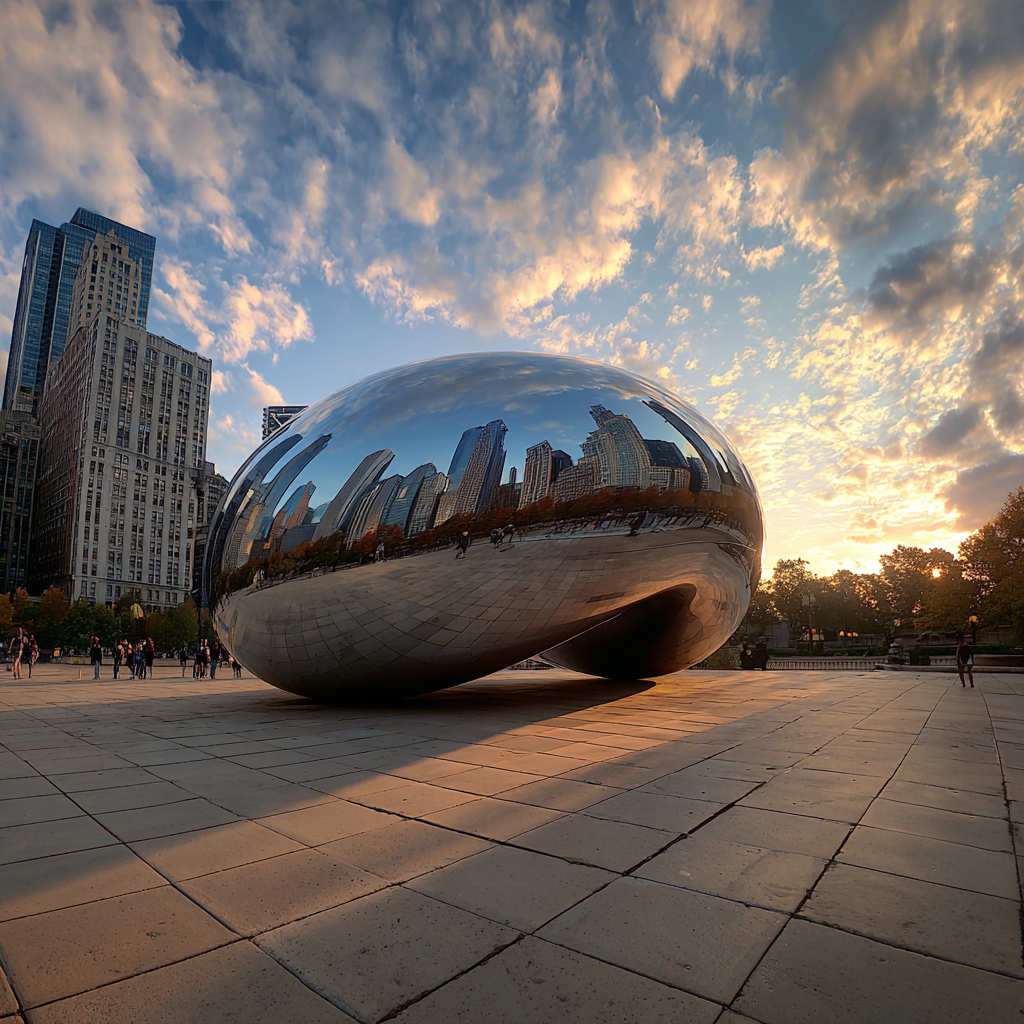
Chicago. Big city. Windy, loud, full of skyscrapers, lake views, and, yeah, that shiny bean in Millennium Park that everyone photographs. But what if you skipped the Bean? What if you spent 24 hours really walking, smelling, tasting, and listening to Chicago, in ways most visitors never do? That’s what we’re about here. Not the checklist, not the postcard - the city that exists beyond the Instagram shots.
Morning: South Loop Streets
Start your morning in the South Loop. It’s a part of Chicago that gets little love from guides. Start at Polk Street and wander east toward State. Sidewalks crowded with office workers, people walking dogs, the smell of coffee, bagels, and faint exhaust. The city wakes here quietly, not with the fanfare of tourist spots.
Stop at a tiny cafe tucked under a brick building. The menu isn’t fancy - a couple of pastries, espresso, black coffee strong enough to wake the dead. The barista doesn’t smile much, but you don’t need that. You need coffee. Take it to go and walk south.
Hidden Architecture
Chicago is architecture, everyone says. But instead of the famous skyscrapers, look at the small things. Rusty fire escapes, old theaters turned into lofts, facades with faded signs from businesses that were here fifty years ago. Walk a block and you’ll see murals painted over brick walls, sometimes faded beyond recognition, telling stories no one bothered to preserve online.
You notice details. The way a doorknob is crooked. The way a window frame has been repaired a dozen times. That’s Chicago history. Living, breathing, imperfect, layered.
Food, Real Food
By 10 a.m., hunger hits. Forget deep dish pizza for now. Head to a small Polish bakery or a Vietnamese sandwich shop. Grab a bahn mi or a kolaczki pastry, and sit on a curb to eat. Watch the city move. Delivery trucks unloading, a man on a bike weaving through traffic, a kid with a backpack running late. It smells like a real city.
Small food joints are gold. The owner might tell you how long he’s been there, what the neighborhood was like before gentrification, what his mother used to cook. You listen, because every detail matters. That’s how you taste the city.
Alleyways and Side Streets
Next, wander into the alleys between Roosevelt and Harrison. You’d never see this on a map. Graffiti tags, old murals, and strange tiny shops tucked into corners you’d pass by if you were in a rush. One alley might have a hidden thrift shop, another a gallery showing student art. Stop. Look. Listen. The rhythm of the street is different here. Slower, quieter, but still unmistakably Chicago.
You notice things like the click of a metal shutter being opened for a delivery, the smell of roasted coffee beans from a nearby roastery, the hum of trains in the distance. You start to feel the city under your skin.
Lunch on the Go
Lunch isn’t a fancy affair. Grab a street taco from a cart on Canal Street, or a sandwich from a corner deli. Sit on a park bench or a low wall. Eat slowly. The people watching is fantastic. Business types rushing past, students laughing too loudly, construction workers taking a break.
You realize, without really trying, that Chicago is more than the skyline. It’s a collection of moments, streets, smells, and people who are too busy living to care about the Bean.
Afternoon: Museums You Actually Notice
Skip the Art Institute for now. Head to smaller, lesser-known places. A photography exhibit in a converted warehouse, a local history museum in a quiet part of town, a tiny gallery where artists are working behind the scenes. These places are messy, intimate, and authentic.
Sit on a bench, watch people interact with the art, talk to a gallery owner, hear why they love this neighborhood. Chicago has a heartbeat in these hidden spots, away from the crowds.
Late Afternoon: Lakefront Walks
The lakefront is a must, even without the tourists. Walk along the path from Museum Campus north toward Grant Park, but avoid the main crowds. Find a small bench, watch boats pass, feel the wind off Lake Michigan. The skyline glows golden in late afternoon, not as perfectly framed as in photos, but real, layered with smoke, reflections, and people.
Notice the joggers, the people on bikes, the kids learning to sail. The city has a rhythm that’s impossible to capture with a selfie stick.
Evening: Neighborhood Bars and Music
Evening brings Chicago’s quieter charm. Head to a neighborhood bar in Pilsen or Bridgeport. Order a drink, maybe a local craft beer. Listen. A band might play jazz or blues in a basement. Patrons talk quietly, laugh, argue. Nobody is posing for photos.
Music is everywhere if you listen. A saxophone from an open window, drums from a rehearsal space, someone singing in Spanish or Polish. You start to understand that Chicago is a city of layers, each street telling a different story, every corner a little performance.
Late Night: Quiet Streets
By night, the South Loop becomes quieter. Neon lights flicker in windows, some bars are still crowded, delivery trucks rumble, and streets reflect the city lights in puddles. Walk slowly. Notice the sound of your shoes on the pavement. The air is cool, slightly damp, smells of coffee, exhaust, and fried food.
Late night is when the city breathes. It’s less chaotic, more intimate. You see residents heading home, someone walking a dog, a couple arguing quietly. One street, one block, one neighborhood - that’s all it takes to feel the pulse of Chicago.
bgpsf-429cf3-a72673
Why Skipping the Bean Matters
Most tourists rush to one photo, one landmark. But this? This is Chicago you feel. The small streets, the food joints, the alleys, the hidden art, the people who live here quietly, authentically.
Spending 24 hours without seeing the Bean doesn’t mean ignoring the city’s icons. It means noticing everything else that makes Chicago, Chicago. The rhythm, the contradictions, the smells, the music, the chaos, the calm. One day, one street, one neighborhood at a time.
uonvd-3491f3-ca3a60
The Real City
Chicago is a collection of neighborhoods, each with its own personality, each with stories buried in brick, tile, and pavement. You walk, stop, talk, eat, observe, and slowly it all makes sense. You’ll leave this day tired, slightly overwhelmed, maybe with a few missed turns, but alive in a way you didn’t expect.
That’s what CityGets is about. The Bean is fine. But the stories, the rhythms, the small unnoticed moments? That’s the city. That’s the soul of Chicago.