Barcelona is famous for Gaudí, La Rambla, and beaches packed with tourists. Everyone knows the guidebook version: Sagrada Família, Park Güell, Casa Batlló. But skip those spots for a day and you’ll find a city full of hidden corners, quiet streets, and places that locals themselves sometimes avoid — and for good reason. That’s where the real Barcelona lives: messy, human, slightly chaotic, and utterly alive.
Morning in a Hidden Barrio
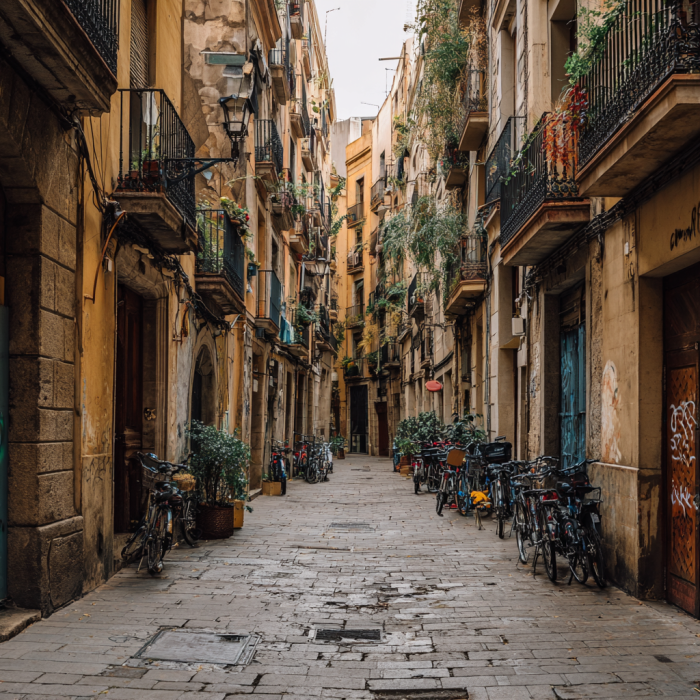
Start your morning in Poble Sec, away from the bustling Ramblas. Narrow streets, low-rise buildings with colorful shutters, and cafés that haven’t been touched by Instagram filters. The smell of fresh bread drifts from a tiny bakery. A man sweeps outside a small grocer, greeting neighbors as they pass.
Step into a small café. Order a café con leche and a croissant. It’s slightly burnt on one side, soft on the other — imperfect, but warm. Sit at a corner table. Listen. A woman at the next table talks loudly on her phone, children argue outside, and the barista greets regulars by name. This is Barcelona lived in, not posed for photos.
Streets Full of Stories
Walk the alleys of Poble Sec or El Raval. Graffiti tags, murals, and fading signs cover the walls. Each one tells a story — political messages, local jokes, small nods to the neighborhood’s past. The streets themselves feel alive, as if they remember the generations who walked them before you.
Notice the layers: a tiny boutique tucked into a faded building, a ceramic shop sandwiched between apartments, a metal shutter with decades-old paint peeling away. Stop and look closely. These streets speak, quietly, if you’re willing to listen.
Hidden Cafés and Breakfast Spots
Mid-morning, hunger strikes. Skip the tourist cafés. Find a small bar where locals eat breakfast. Perhaps a jamón sandwich with fresh bread, a sweet pastry, and strong coffee. Sit and watch the interactions. Locals greet each other warmly, exchange gossip, talk about football or neighborhood events.
These small moments, ordinary to residents, are extraordinary for visitors. You feel the city in gestures, in tone, in laughter spilling across tables.
Markets and Small Shops
By late morning, explore a local market — Mercat de Sant Antoni or a small hidden market in Gràcia. Vendors sell fresh produce, seafood, spices, and olives. The air smells like ripe tomatoes, grilled fish, and freshly baked bread.
Talk to vendors if you can, or just observe. The market is chaotic but alive. You notice the rhythm of daily life: people coming to buy ingredients for lunch, workers chatting, kids peeking at candy stalls. Markets like this show the Barcelona beyond the postcards: messy, human, and full of energy.
Streets the Locals Avoid
Not every street is charming. Some neighborhoods are slightly run down, walls covered in graffiti, streets empty, maybe a faint smell of trash or exhaust. Locals avoid these places, but they tell stories too.
Walk slowly, notice the details: old posters peeling from walls, a stray cat darting between parked scooters, cracked tiles, the hum of a distant train. These streets reveal the city’s underbelly — the parts that aren’t polished for tourists but are part of the fabric of life here.
Lunch in a Quiet Spot
For lunch, find a small family-run eatery tucked off a main street. Maybe tapas, maybe a plate of fideuà, something simple, prepared with care. Sit on a bench or a small table. Listen to the chatter around you.
Notice the smells, the sounds, the laughter. People argue over football, joke with the owner, discuss politics. You’re not just eating; you’re participating in a tiny piece of city life. That’s the difference between a tourist experience and truly getting to know a place.
Afternoon: Art and Hidden Galleries
Barcelona’s famous museums are crowded. Instead, explore small galleries or artist studios. El Raval and Gràcia have plenty of hidden art spaces. Some display paintings, others sculpture, some experimental installations.
Stop, look, ask questions. These spaces are intimate, messy, and full of personality. Artists often work behind the scenes. You might see a painter adding finishing touches or a sculptor carving quietly. This is the city’s creative heart, away from the polished tourist trail.
Late Afternoon: Parks and Quiet Corners
Escape to a small park or square — maybe a corner of Parc de la Ciutadella that tourists rarely reach, or a tiny plaza in Gràcia. Children play, neighbors chat, and street performers practice quietly.
Notice the little rhythms: the way sunlight hits leaves, how shadows stretch across benches, the smell of freshly mown grass or flowers. The city hums here in a quiet, unassuming way, far from the crowds.
Evening: Neighborhood Bars
By evening, Barcelona shows a different pulse. Head to a local bar — an unassuming place with small tables, strong drinks, and warm chatter. Order a glass of vermut or a local beer. Listen to the conversations.
People talk about work, love, family, football, politics. Laughter bursts out unpredictably. You might overhear a story about someone who grew up here, or a joke only locals understand. This is the heartbeat of the city, messy and intimate.
Night Walks
As night falls, streets empty slightly, lanterns glow, the smell of grilled food drifts from small eateries. Walk slowly, let the city reveal itself. Look at old buildings, balconies with laundry hanging, small shop signs glowing softly.
Listen for distant music, footsteps, voices, the occasional scooter. These streets tell a story the guidebooks ignore: the real Barcelona lived in, not polished for photos.
Why Visiting Streets the Locals Avoid Matters
Most travelers rush to landmarks. That’s fine. But the essence of Barcelona is in the streets locals sometimes avoid, in small cafés, hidden markets, alleys, and quiet corners. It’s messy, imperfect, human.
Walking slowly, tasting, listening, and observing allows you to understand the city’s rhythm. You feel the contradictions, the beauty, the chaos, and the intimacy. One alley, one market, one café at a time.
The Real Barcelona
Barcelona is messy, vibrant, human, and full of layers. It smells like coffee, grilled food, flowers, and the faint tang of the Mediterranean. It sounds like conversations, footsteps, scooters, laughter, and street performers.
Skip the crowded tourist spots for a day. Walk slowly. Sit. Observe. Listen. Taste. Let the city reveal itself. Streets the locals avoid are streets with stories. Barcelona beyond the famous sites is alive, imperfect, and unforgettable.
jukoe-e6dbe9-6e3071